
Whole-House Rewiring
Experienced Whole House Rewiring in San Antonio
New Wiring for an Older House
Our crew does whole house rewiring in San Antonio for older homes, replacing tired wire with new grounded circuits in every room. Maybe a home inspector flagged the wiring, the lights flicker for no reason, or your insurer is asking how old the wiring is. Those are good reasons to call, and a rewire usually doesn’t mean tearing out whole walls. When we rewire a house, the old wire comes out of service and every new circuit gets a ground. JI Hopes, our owner, is a Texas Master Electrician (TDLR #514109), and our rewires are done under his license. We’re licensed and insured, and we handle home rewiring and electrical wiring installation.
When Rewiring Beats Patching
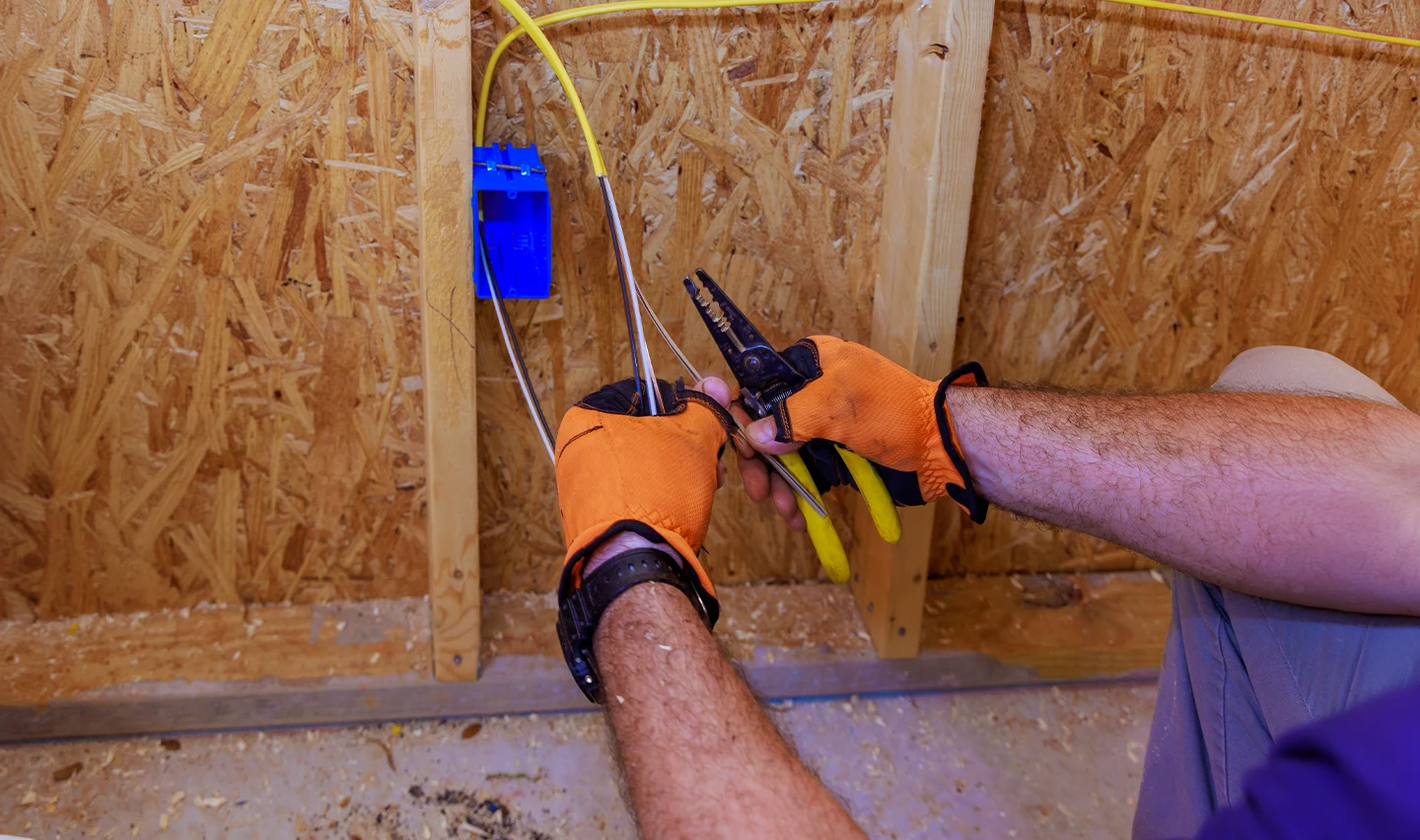
Not every old house needs a full rewire, and we’ll tell you so when a repair will do the job. A loose outlet or one bad circuit gets fixed on its own. The answer changes when the problem is the wire itself, spread through the whole house. A rewire makes sense when you find crumbling cloth-insulated wiring or ungrounded two-prong outlets in room after room. The same goes for knob and tube, the old style of single wires run on porcelain knobs. A corner-cutter swaps two-prong outlets for three-prong ones and calls it done, with no ground wire behind them. A three-prong outlet with no ground behind it only looks safe. We run a grounding conductor, or ground wire, back to the panel on every new circuit, so that third prong has somewhere to go.
Cloth, Knob and Tube and Aluminum Wiring
Knob and tube came first, and it was never built to carry a ground or the loads a modern kitchen puts on it. Cloth-covered cable came later, and its fabric jacket turns brittle with age, so a bump during a remodel can crack it open. Aluminum branch wiring, the circuits that run out to outlets and lights, went into some homes from about 1965 through 1973. The Consumer Product Safety Commission called it a fire hazard, because the connections at outlets and switches can loosen and heat up. Near JBSA-Lackland, over half the homes in ZIP 78227 date to the 1960s and 70s, so we check for aluminum before planning the job. We also do aluminum wiring replacement, so those runs become copper branch circuits with solid connections. Leaving old wire in service just gives a loose connection more time to heat up.
Rewiring While You Live in the Home
Most rewires don’t mean moving out, even though every room gets new wire. In a lived-in home, a rewire usually goes room by room, and finished circuits get their power back at the end of the workday. The job usually starts with circuit mapping, so we know which breaker feeds which lights and outlets in each room. That map tells us which rooms lose power during each part of the job, and we tell you before it happens. You’ll want to know when the kitchen goes dark, and so will whoever makes the morning coffee. Most of the new cable travels through attic runs, then drops down inside the walls to each outlet and switch. A pier and beam house sits up on supports with a crawlspace underneath, so we can often feed cable up from under the floor, too. Clearing a path to the attic hatch and any crawlspace door before we arrive saves everyone some time.
Wall Openings and Patching
Rewiring means some holes in the walls, but fewer than most people picture. We fish new cable through the walls from above or below, so wall openings are usually small cuts near outlets and switches. Many older walls are plaster and lath, which is plaster spread over thin strips of wood. Old plaster cracks when it’s cut in a hurry, so openings in those walls take extra care. Some crews finish the wiring and leave you a wall full of holes and a phone number for a drywall guy. We patch the openings ourselves, so you aren’t calling around for a drywall crew once the wiring’s done. When we explain the plan, we talk through where the openings will likely go in each room.
Bringing an Older Home Up to Code
A rewire is the moment an older house catches up with the current code. An early 1930s house in Jefferson may still run on original wiring with no ground, so we plan grounded circuits for every room. Most rewires use NM-B cable, which bundles the copper wires and a bare ground inside one plastic jacket. The current code calls for AFCI protection on most new circuits in living areas, and an arc fault breaker is the common way to add it. That breaker shuts a circuit off when it senses arcing, the kind of sparking that damaged wire can throw. Think of it as a smoke detector built into the breaker, except it reacts to the spark instead of the smoke. We handle electrical code corrections too, so the wiring items on a buyer’s inspection report get fixed the right way. An inspector looks over the new wiring after we do, under a permit we pulled. If your panel is full or outdated, we can pair the rewire with an electrical panel upgrade in the same project. Rewiring is one part of our electrical installation service, alongside new circuits and dedicated lines for big appliances.
Before the First Wall Is Opened
Call (726) 268-9306 and tell us what you’ve found, whether that’s an inspection report, a warm outlet or lights that won’t stop flickering. We answer the phone at any hour. If something is sparking or smells hot, the crew may come out that night. Other times we switch off the problem circuit to make it safe and come back for the repair. For a planned rewire, we look the house over, check the panel and map the circuits. Before the first wall is opened, we walk you through the plan room by room, so you know what happens where. That walkthrough is where you hear which rooms lose power when, where the openings go and the price for the job. Every rewire is done under a licensed master electrician. We’ve been a family-owned electrician in San Antonio since 2019, with our shop in Leon Valley.
FAQs About Whole House Rewiring in San Antonio
A rewire is a big job, so it’s fair to want answers before anyone opens a wall. These are questions owners of older homes often ask us first.
Square footage and the number of circuits set most of the price on a rewire. Attic and crawlspace access matter too, because easy access means fewer wall openings. Plaster walls take more care than drywall, and a vacant house is quicker to work in than one you’re living in. We give you the price when we walk you through the room-by-room plan, so you can see where the work goes.
Usually, yes. Rewires in lived-in homes typically go one area at a time, and finished circuits get power back at the end of the workday. Some rooms will be without power while we work in them. We’ll tell you which ones ahead of time so you can plan meals, work and sleep around it.
Yes, we patch the openings ourselves. You won’t need to hire a separate drywall crew after the wiring’s done. Because most of the cable gets fished through the attic or crawlspace, the openings are usually small and close to outlets and switches.
Not always. A two-prong outlet means that circuit has no ground, and sometimes a ground wire can be added without rewiring the house. If the wire behind it is brittle cloth or aluminum, a rewire usually makes more sense. We check what’s behind the outlets and tell you which case you’re in.
We pull the permit and schedule the inspections with whichever city covers your address. An inspector sees the new wiring before the openings are closed up and again when the job’s done.
Call us with the report in hand and read us the electrical items. We’ll look at the house and tell you which items are safety problems and which can wait. You’ll also know whether repairs will cover it or the house needs a rewire, which helps when you talk to the seller.
We don’t install smart home systems, low-voltage wiring like network, speaker or security cable, or well pump circuits, and we don’t wire new home construction. A rewire with us covers the power side: circuits, outlets, switches, light fixtures and the connections at your panel. If you’re adding low-voltage work, plan it with that installer so their crew follows ours.
Labor and parts are covered for one year, counted from the day we finish. It covers the work our crew does and the parts we put in. Keep your paperwork from the job, and call (726) 268-9306 if something we installed acts up.
Our Services
The right electrician changes everything
Did you know?
Most of Texas runs on its own power grid, called ERCOT, kept largely separate from the rest of the country. When you flip a switch in San Antonio, you’re drawing on a system that’s about as Texan as it gets.

The right electrician changes everything. Complete service for your home or commercial property.
Could you help us with a review?
We sure could use your help letting San Antonio know how good we are.
Learn More
Services
Copyright © 2026 Green Light Electric | 4700 Timco W, San Antonio, TX 78238 | Licensed & Insured · Green Light Electric License #TDLR35520