
Tesla Wall Connector
Certified Tesla Wall Connector Installation in San Antonio
Faster Home Charging Starts at the Panel
Most people who call about a Wall Connector are charging on the Mobile Connector and tired of waiting on it, but they’re also wondering if the panel can take one more big circuit. Tesla Wall Connector installation in San Antonio starts with that question, so we run a load calculation before we size anything. In Cibolo, 81.2% of homes were built after 2000, and a panel that new often has room for a dedicated circuit without an upgrade. Older homes closer in are more of a coin flip, and the calculation settles it either way. We’re a Tesla Certified Installer for both the Wall Connector and the Powerwall. We’re a family-owned electrician with a shop in Leon Valley, and every job runs under a licensed master electrician, JI Hopes.
Wall Connector vs Mobile Connector
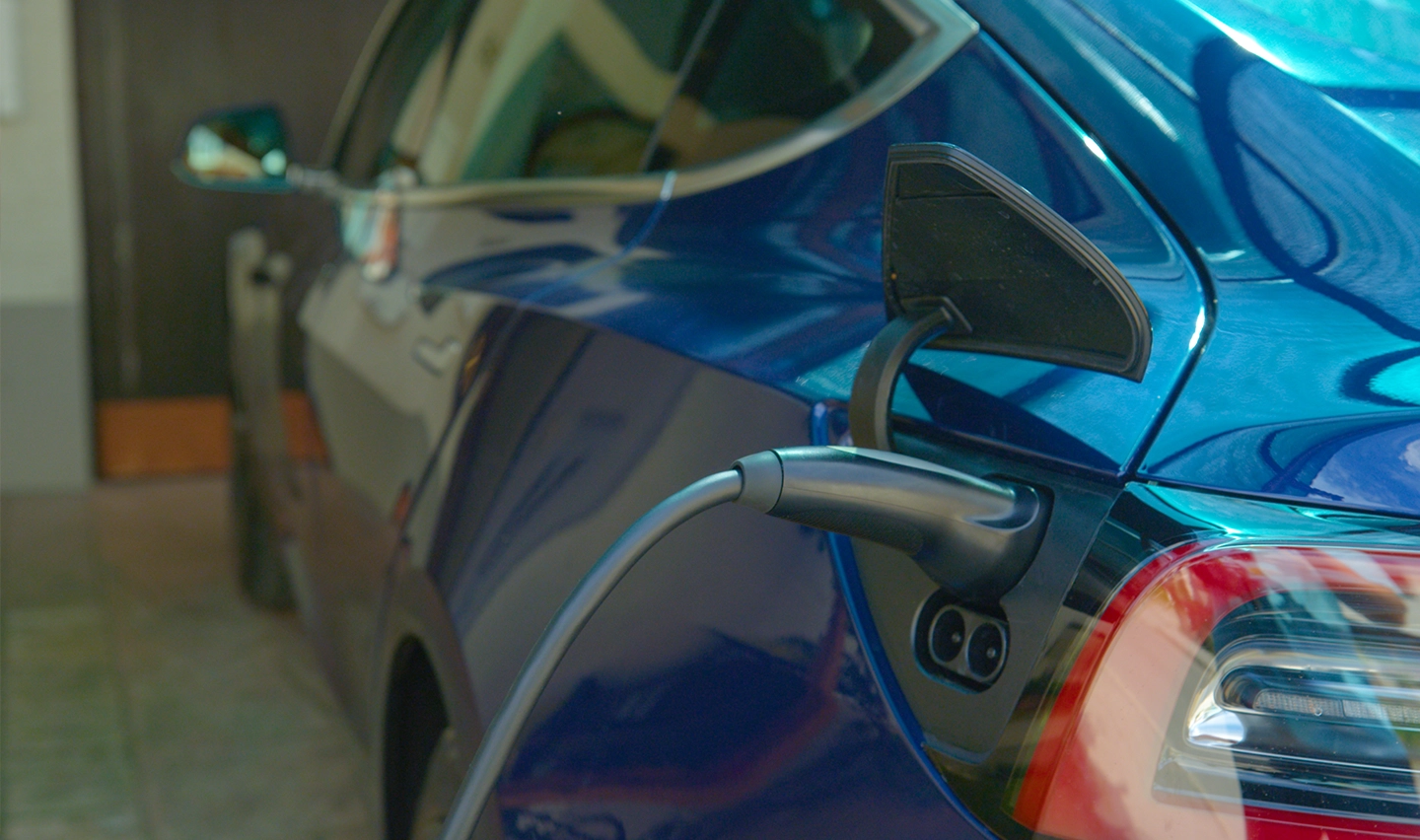
People often think a Mobile Connector plugged into a NEMA 14-50 outlet does the same job as a Wall Connector. It’s a 240-volt outlet, a lot like the one behind your dryer. The Mobile Connector will charge the car from it, but it tops out at a lower rate, and a plug can loosen with years of use. The Gen 3 Wall Connector is hardwired to its own circuit, so there’s no plug in the wall to wear out. Tesla’s install manual says not to put a GFCI breaker on its circuit, because the ground-fault protection is already built into the unit. The connector on the cable is Tesla’s own plug, now called NACS, and other carmakers are starting to use it. If your daily miles are short and the Mobile Connector keeps up, we’ll tell you so. We’d rather point out a way to save than sell you a circuit you won’t use.
Circuit Size and Charging Speed
The breaker size sets how hard a Wall Connector can charge. That size gets programmed into the unit at commissioning, the setup step at the end of the install. A 60 amp breaker allows 48 amp charging, which Tesla rates at 11.5 kW, and that’s the unit’s top setting. Smaller circuits step down from there, so a 40 amp breaker gives you 32 amps at the car. It’s easy to assume a bigger breaker always means a faster charge, but the car’s onboard charger has a limit of its own. Full output also needs copper wire at least 6 AWG thick between the panel and the unit. With wire sizes, a lower number means a thicker wire. Setting the unit to its highest number and hoping the panel holds isn’t sizing. We size the circuit to what your panel can carry and how far you drive, then set the unit to match.
Panel Capacity and Load Management
Your panel already feeds the AC, the range, the dryer and maybe a pool pump, so the charger has to fit beside all of them. We check your panel’s capacity before we size the circuit, so the charger fits the house you actually have. A load calculation adds up what the house can draw at once and shows how much room is left over. When it’s tight, we can set the Wall Connector to a smaller breaker, or add load management so charging backs off when the house gets busy. We handle EV charger installation for Teslas and other electric cars across San Antonio. If the numbers come up short, we do an electrical panel upgrade first and then add the charger circuit. When a panel upgrade needs the meter pulled, we line that up with CPS Energy or your local utility before work starts.
Garage Mount or Outside Wall
Mounting it in the garage, close to where the charge port ends up when you park, keeps the cable off the floor. Nobody wants to step over a charging cable with groceries in both hands. A longer car, like a Cybertruck, can move the right spot on the wall. The unit is outdoor rated, with a Type 3R enclosure, so it can go on an outside wall by the driveway too. Outside, Tesla’s manual calls for mounting it at least 24 inches up. We also plan the conduit run, the protective pipe the wire travels in, from the unit back to the panel. Commissioning is the last step, when we set the breaker size in the unit and join it to your Wi-Fi. The unit joins your home network on the 2.4 GHz band, the longer-reach signal most home routers put out.
Power Sharing for Two Teslas
Adding a second Tesla doesn’t always mean doubling what the panel has to carry. Tesla’s manual gives each Wall Connector its own branch circuit, which means its own breaker and wire run from the panel. With power sharing on, the units split the power between cars. When a Model Y and a second Tesla both plug in at night, neither one hogs the power. The total stays inside a limit we set in the load sharing setup, where we tell the units how much they can draw together. How many units can share depends on the firmware, which is the software built into each unit. We check it for your setup instead of going by memory. If a Powerwall’s on your list too, we also handle Tesla Powerwall installation, so you can plan both around one panel.
Permits, Inspection and Your First Call
A Wall Connector is a new circuit, so it gets a permit and an inspector’s sign-off before you charge on it. We pull the permit and schedule the inspection, so somebody besides our own crew checks the work. Call (726) 268-9306 and we’ll ask what you drive, where you park and what’s in your panel. We explain the options before any work starts, and we’re licensed and insured. Calls are answered any hour, day or night, but installs are daytime work. If a charger or breaker fails after hours, the situation decides whether we fix it that night or make it safe and come back. We also work as an electric vehicle charging station contractor for other charger brands and for businesses.
FAQs About Tesla Wall Connector Installation in San Antonio
Quick answers on outlets, breakers, mounting, Wi-Fi and certification for a Wall Connector at your house. If yours isn’t here, call (726) 268-9306.
You can, and for short daily driving it may be all you need. The Mobile Connector charges at a lower rate, and it depends on an outlet and plug that can loosen with use. If the car isn’t catching up overnight, a Wall Connector on its own circuit is the next step. We’ll tell you plainly which one fits how you drive.
The Gen 3 unit already has ground-fault protection built in. Tesla’s install manual says no GFCI breaker goes on its circuit. We use a standard breaker sized to the setting we program into the unit.
Yes. It has a Type 3R enclosure, so Tesla rates it for indoor or outdoor mounting. On an outside wall, the manual wants it at least 24 inches off the ground. We pick the spot around where you park and how the conduit gets back to the panel.
The distance from your panel to the spot on the wall is the big one, since a longer run means more wire and conduit. Panel capacity matters too, because a full panel may need load management or an upgrade first. The circuit size, indoor or outdoor mounting and the permit round it out. We look at all of it before you commit to anything.
It helps a lot. The Wall Connector joins your home network on the 2.4 GHz band during commissioning. If the signal’s weak in the garage, it’s smart to fix that before install day.
No. Network cable is low-voltage work, and that’s not something we take on. A Wi-Fi extender or a low-voltage contractor can help with the signal. We handle the EV charger installation, the circuit behind it and the panel it runs from.
A Tesla certification is product training on top of the license, not in place of it. Our work runs under a licensed master electrician, JI Hopes (TDLR #514109), and Tesla has certified us on both the Wall Connector and the Powerwall.
Yes. The breaker size is programmed into the unit at commissioning, so it can run on a smaller circuit today. After an upgrade, the wire and breaker both have to support the higher setting before the unit gets changed. We’ll tell you up front whether the wire we run now can handle a bigger breaker later.
Our Services
The right electrician changes everything
Did you know?
Tesla the car company took its name from Nikola Tesla, whose alternating current system lit the 1893 Chicago World’s Fair. Visitors walked through a glowing city of white buildings at night. Today his name’s on the Wall Connector charging cars in Texas garages.

The right electrician changes everything. Complete service for your home or commercial property.
Could you help us with a review?
We sure could use your help letting San Antonio know how good we are.
Learn More
Services
Copyright © 2026 Green Light Electric | 4700 Timco W, San Antonio, TX 78238 | Licensed & Insured · Green Light Electric License #TDLR35520