LED Retrofits
Professional LED Lighting Retrofit in San Antonio
Flickering Tubes and Dead Ballasts
When the tubes over the front desk flicker and the back high bays keep going dark, your lights need help. An LED lighting retrofit in San Antonio swaps out the fluorescent tubes and ballasts that keep failing. LED makes more light for every watt, too. Each fluorescent fixture hides a ballast, the box that starts the tubes and holds the current steady. As ballasts age, you get the buzz, the slow start and the flicker that has everyone squinting by lunch. Every dead tube or ballast means a ladder, a part and somebody’s afternoon. Going LED gets rid of the tubes and ballasts that wear out, so the ladder comes out a lot less often. Green Light Electric handles commercial electrical services for offices, shops and warehouses, and JI Hopes worked as a commercial electrician before he started the company. We also do lighting installation, so the crew pulling your old tubes can add fixtures where the work actually happens.
Fluorescent to LED Conversions
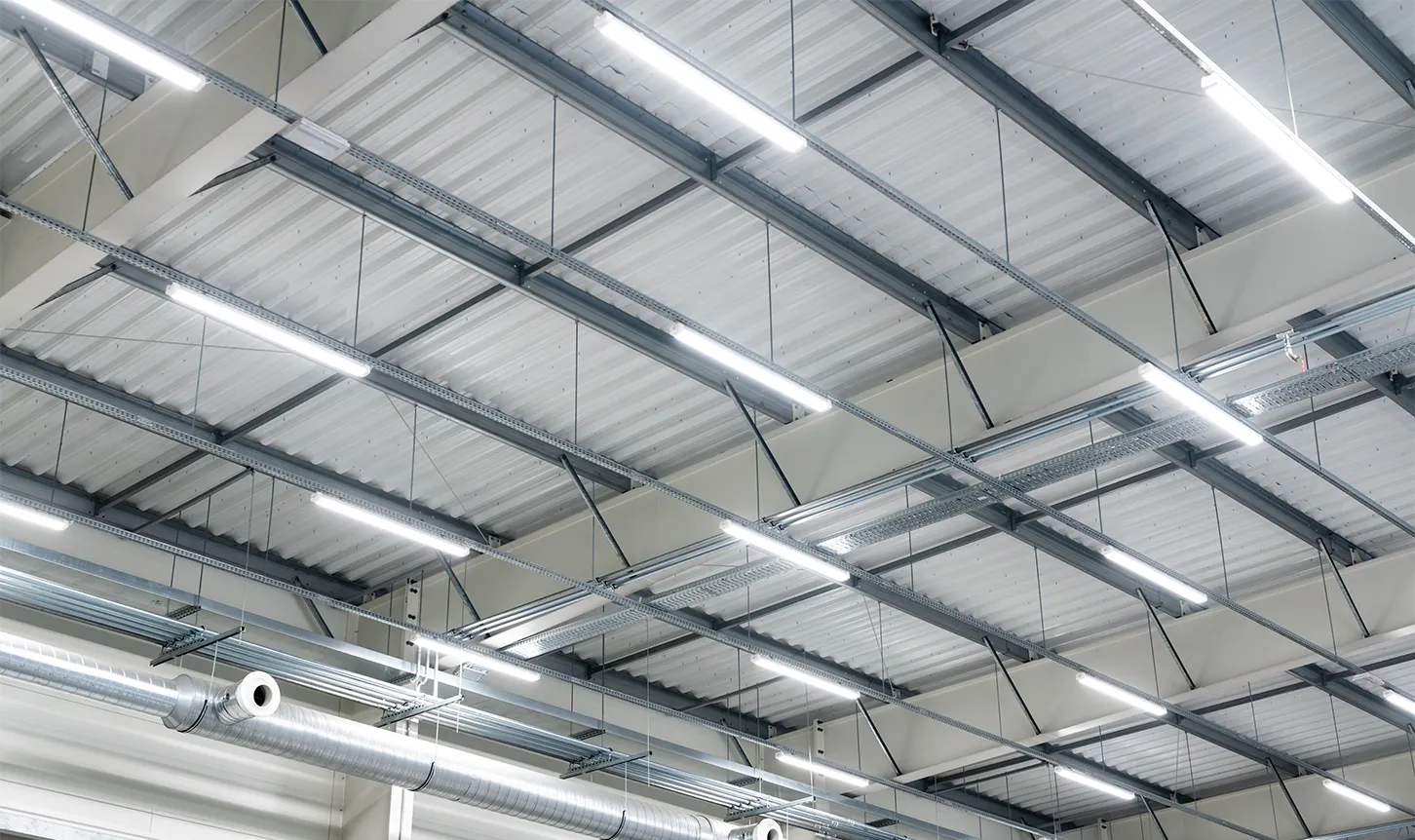
You’ve got three ways to make the switch, depending on the shape your fixtures are in. Plug-in LED tubes snap into the old sockets and run on the ballast that’s already there. It’s the quick swap, but when the old ballast dies, the new tube goes dark with it. A ballast bypass takes the ballast out and sends power straight to the sockets. The LED tubes then run on their own built-in driver, a small power supply inside the tube. Done right, the sockets get rewired to match the tube and the fixture should get a label saying it’s been converted. The label is there so the next person doesn’t push a fluorescent tube back into a fixture that can’t run one. When office troffers, the flat lights set in a ceiling grid, have yellowed lenses and tired reflectors, it often makes sense to use troffer retrofit kits. The kit replaces the insides with an LED panel and driver, and the housing stays put in the ceiling grid. Most of the time, you don’t end up with torn-out ceiling tiles or dust all over the desks.
Warehouse and High Bay Lighting
If your warehouse still runs metal halide lamps, you know their worst habit. After a power blip, they need to cool down before they’ll restart, then take a while to reach full brightness. As they age, they dim and drift in color, so one aisle can look bluish while the next looks pink. With LED high bay fixtures, the light comes on full the moment you hit the switch. It holds its color better as it ages, too. Choose fixtures with good color rendering and your crew can read labels, match parts and spot a spill on the floor. High ceilings usually mean a lift, and the job gets planned aisle by aisle around your forklifts and pickers. Your warehouse lights should be the thing you forget about, with the lift parked and every aisle lit. Retail floors and showrooms need a different touch, because the light is part of how the product looks. As a lighting contractor, we match color temperature across the floor so one corner doesn’t look warmer than the rest.
Lower Bills and Fewer Ladder Trips
Your power bill counts kilowatt hours, which is the watts your fixtures draw multiplied by the hours they stay on. LED shrinks the first number because it makes more lumens per watt, so the same light takes less power. Adding occupancy sensors shrinks the second, so lights in storage rooms, restrooms and break rooms shut off when nobody’s there. Near big windows, some LED fixtures have daylight harvesting built in, so they dim when the sun is doing the work. The other savings show up in maintenance costs, because LED lasts much longer than the tubes you’re changing now. We won’t promise you a savings number, because it depends on your hours, your fixture count and your power rate. What we can do is walk your space, count what you’ve got and show you which changes make sense. Whoever’s been changing tubes all these years may even miss the ladder, though we doubt it.
Scheduling Around Business Hours
We work nights and weekends, so your business can stay open while the lights change over. On a bigger floor the work goes in sections, so the areas you need each morning are lit before your people walk in. When you call (726) 268-9306, tell us roughly how many fixtures you’ve got, what kind they are and what’s failing, and we’ll plan from there. Calls are answered any hour, so if a fixture is sparking or a whole floor goes dark after closing, call anyway. Depending on what’s wrong, the crew heads over that night or makes the area safe and comes back to finish. Before the first fixture comes down, we walk you through your choices, and when the job needs a permit, we pull it and schedule the inspection. Green Light Electric is a family-owned electrician, and every job runs under a licensed master electrician, JI Hopes. Dark lot outside too? We can look at the parking lot lighting while we’re there. For a bigger job, like moving walls or building out a new suite, we work as a tenant finish out electrician.
FAQs About LED Lighting Retrofit in San Antonio
Business owners ask us these before they swap out a single tube. If yours isn’t here, call (726) 268-9306 and ask us straight.
Usually, yes. If the housings are in decent shape, LED tubes or a retrofit kit can go into what’s already on your ceiling. A full fixture swap makes more sense when the housing is rusted, cracked or wrong for the light you need. We’ll look at what you have and tell you which way fits.
Yes, when it’s done right. The sockets get rewired to match the tube, and power is connected the way the tube’s maker lays out. The fixture should also get a label saying it’s been converted. Trouble comes from guesswork, like mixing tube types or skipping the label. Our work is done under a licensed master electrician, so it’s wired to the instructions.
Most of the time it’s the ballast. Plug-in LED tubes run on the fixture’s existing ballast, and an old or mismatched one can make them flicker, hum or cut out. A new tube won’t fix that. Bypassing or replacing the ballast usually does, and we’ll check the sockets and wiring while the fixture is open.
Usually because the two quotes aren’t covering the same work. The fixture count and the type of fixtures come first, then how easy the ceiling is to reach. High warehouse ceilings may need a lift, and adding sensors or dimmers adds parts and labor. Night or weekend scheduling can shape the plan too, and we’ll go over all of it with you up front.
Yes, it can go area by area, and nights and weekends both work. When you call, tell us your business hours and which areas have to be open first each morning. We’ll plan the order of the work around that, so the spaces you need are ready when your people walk in.
That’s how metal halide lamps work. After they shut off, even from a quick power blip, they have to cool down before they’ll restart, and then they warm up slowly. LED high bays don’t have that delay and come right back on. If you’re tired of standing in a dark warehouse waiting, that’s a good reason to switch.
No, not every room. They fit storage rooms, restrooms, break rooms and warehouse aisles, where people come and go. Where someone sits still for a long stretch, a basic sensor can shut the lights off on them. We’ll point out where sensors make sense and where a plain switch is the better call.
No. We don’t do smart home or low-voltage systems. We stick to the electrical side of the job: fixtures, tubes, the wiring behind them, and switches or sensors in the wall.
Our Services
The right electrician changes everything
Did you know?
Austin still has moonlight towers from the 1890s, about 165 feet tall, built to light whole neighborhoods from above. It’s believed to be the only city still using them. The tall poles over Texas parking lots do the same job today, just a lot shorter.

The right electrician changes everything. Complete service for your home or commercial property.
Could you help us with a review?
We sure could use your help letting San Antonio know how good we are.
Learn More
Services
Copyright © 2026 Green Light Electric | 4700 Timco W, San Antonio, TX 78238 | Licensed & Insured · Green Light Electric License #TDLR35520