
Breaker Keeps Tripping
Reliable Circuit Breaker Repair in San Antonio
Stop Resetting the Same Breaker
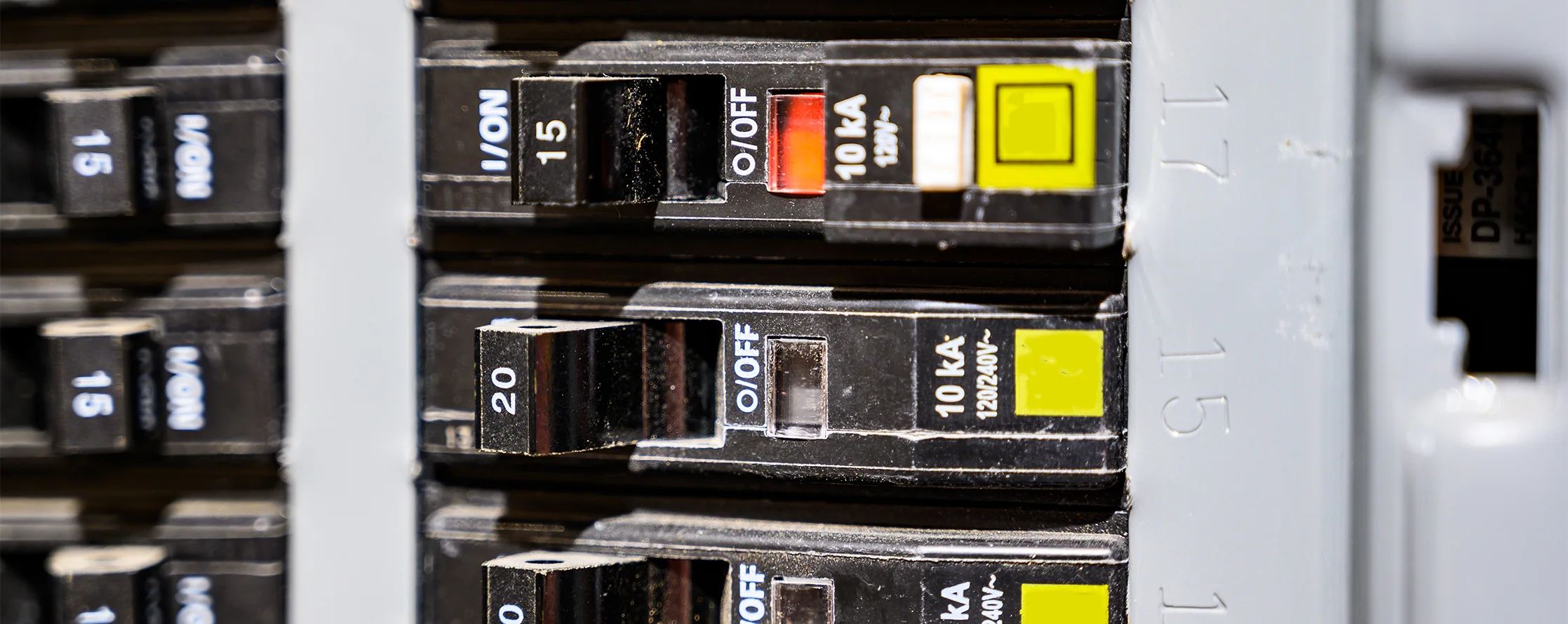
You should be able to run the dryer, the microwave and the lights at once without a walk to the panel. When you can’t, call us for circuit breaker repair in San Antonio, and we’ll find out why that breaker keeps tripping before we fix anything. Resetting it again and again is like pulling the batteries from a smoke alarm that keeps beeping. A breaker trips to keep the wire in your walls from overheating, so each trip is a warning. We handle electrical troubleshooting, circuit breaker replacement and electrical repair for homes across San Antonio. We troubleshoot first, so a new breaker only goes in when testing shows the old one failed.
Overload, Short or Ground Fault
A breaker that trips after the dryer has run a while is telling a different story than one that snaps off the second you reset it. When too much runs on one line, you’ve got an overloaded circuit, and that breaker usually holds for a while before it lets go. If it snaps off the moment you reset it, we suspect a short circuit. Somewhere on that line, the hot wire that carries power is touching the neutral wire that carries it back. Water, a nicked wire or a worn cord can leak current to ground instead, and that’s a ground fault. Each of those needs a different fix, so we test the circuit before we touch a part instead of guessing at a breaker. Tell us what you’ve noticed before we open the panel, since your clues usually shorten the hunt.
Space Heaters, Window Units and Microwaves
Long, hot Texas summers keep window units running hard on older bedroom circuits. Many of those circuits were laid out for a lamp, a fan and a clock radio. Come the first cold snap, a space heater lands on that same circuit, and the trips start. In the kitchen, the microwave and toaster often share one countertop circuit, so running both at once can trip it. The corner-cutter fix is a bigger breaker on the same small wire. The trips stop, and the wire starts overheating inside your wall. We run a dedicated circuit for the window unit or the microwave, sized for its own load. As JI puts it, “Our focus is safety and quality. A lot of corner-cutters out there.”
AFCI and GFCI Nuisance Trips
Newer homes and remodeled rooms usually have arc-fault breakers. The current code requires AFCI protection on most new or extended circuits in living areas. They watch for the tiny sparks of a loose or damaged connection, which an ordinary breaker usually never notices. Some trips are real, and some are what electricians call AFCI nuisance tripping. An older vacuum motor or two circuits sharing one neutral can set those off. A GFCI is usually the outlet with test and reset buttons, and it cuts power when current leaks. A GFCI trip on a patio or bathroom outlet often traces back to water in the box or a cracked cord. Trading an AFCI or GFCI for a plain breaker strips away the protection those breakers were put there for, so we find the real trigger. If the device itself has worn out, we replace it and test the circuit again.
Worn Breakers and Tired Panels
Breakers wear out too, and a worn breaker can start tripping on loads it carried for years. Heat or a scorch mark at the breaker can mean a loose fit on the panel. With the cover off, we check the breaker, its wire and the metal bus bar it clips onto for heat marks. A breaker replacement has to be a type made for that panel, so we read the label first. We also check load balancing across the two incoming hot lines, called legs. Heavy circuits bunched on one leg of the panel can work that leg harder. If one breaker is the whole problem, you’ll hear that, and one swap ends it. Sometimes the panel inspection turns up rust, scorched bars or no room left for a new circuit. If the panel itself is the problem, we’ll say so plainly and show you what we found. An electrical panel upgrade then puts in a new Square D or Eaton panel. We pull the permit and schedule the inspection.
Calling About a Breaker That Won’t Quit
When you’ve got a tripping breaker, call (726) 268-9306 and tell us what was running when it let go. Calls are answered any hour. What you describe decides whether the crew comes out that night or we make the circuit safe and come back to finish. If the panel buzzes, smells hot or shows scorch marks, keep your hands off it and call us first. Once we’re there, you’ll hear what we found and what the fix takes before anybody picks up a tool. The work is done under JI Hopes, a licensed master electrician, TDLR #514109, and Green Light Electric holds TDLR Electrical Contractor licensed and insured #35520. Our family has run this electrician business here since 2019, and as an electrical repair shop we fix dead outlets and flickering lights too.
The right electrician changes everything
Did you know?
In 1600, English scientist William Gilbert noticed that rubbed amber could pull in bits of straw, and he coined the Latin word electricus from the Greek word for amber. Every time you say electricity, you’re naming a chunk of fossilized tree resin.
Before You Reset It
FAQs About Circuit Breaker Repair in San Antonio
Reset it once, and if it trips again, leave it off. Each reset sends the same overload or fault back through the wire, and that heat adds up inside the wall. Unplug what’s on that circuit and call us, and we’ll track down the cause.
No. The breaker is sized to protect the wire behind it. A bigger one lets that wire run hotter than it’s rated for. The trips stop, but the risk moves inside your wall where you can’t see it. If one appliance needs more, we run it a circuit of its own.
It usually points to a short or a ground fault somewhere on that circuit. Leave it off, because each reset sends a burst of current through the fault. The problem could be in a device, an appliance cord or the wiring itself. We test the circuit piece by piece until we find it.
They watch for arcing, the tiny sparks a loose or damaged connection throws off, and an ordinary breaker ignores those. Some trips come from a real wiring problem. Others come from an older motor or a shared neutral that confuses the breaker. We sort out which one you’ve got before anything gets replaced. Pulling the arc-fault protection out isn’t an option, because the current code requires it on most new or extended living-area circuits.
Warning signs are a breaker that trips on a light load, feels warm, won’t stay in the on position or shows a scorch mark. A breaker can also feel loose where it sits in the panel. Don’t pull the panel cover to check, because the parts behind it stay live. We test it with a meter and replace it if it’s failed.
It depends on what’s causing the trips, so there’s no set figure for it. The biggest driver is whether one worn breaker needs replacing or an overloaded line needs a new circuit of its own. If the panel itself turns out to be the problem, that’s a bigger job. We explain what we found and what it takes before any work starts.
Usually, yes. A breaker that’s off sends no current down that wire, so leaving it off overnight is safer than resetting it again. If that circuit runs the fridge, or the panel smells hot or buzzes, call (726) 268-9306, because calls are answered any hour. Depending on what you’re seeing, a crew may head over that night, or we’ll make it safe and return to finish.
A tripped breaker is on your side of the meter, so it’s a job for an electrician. Breakers sit in your home’s panel, and the utility doesn’t work on them.

The right electrician changes everything. Complete service for your home or commercial property.
Could you help us with a review?
We sure could use your help letting San Antonio know how good we are.
Learn More
Services
Copyright © 2026 Green Light Electric | 4700 Timco W, San Antonio, TX 78238 | Licensed & Insured · Green Light Electric License #TDLR35520