
Recessed Lighting
Experienced Recessed Lighting Installation in San Antonio
Our Services
Get In Touch
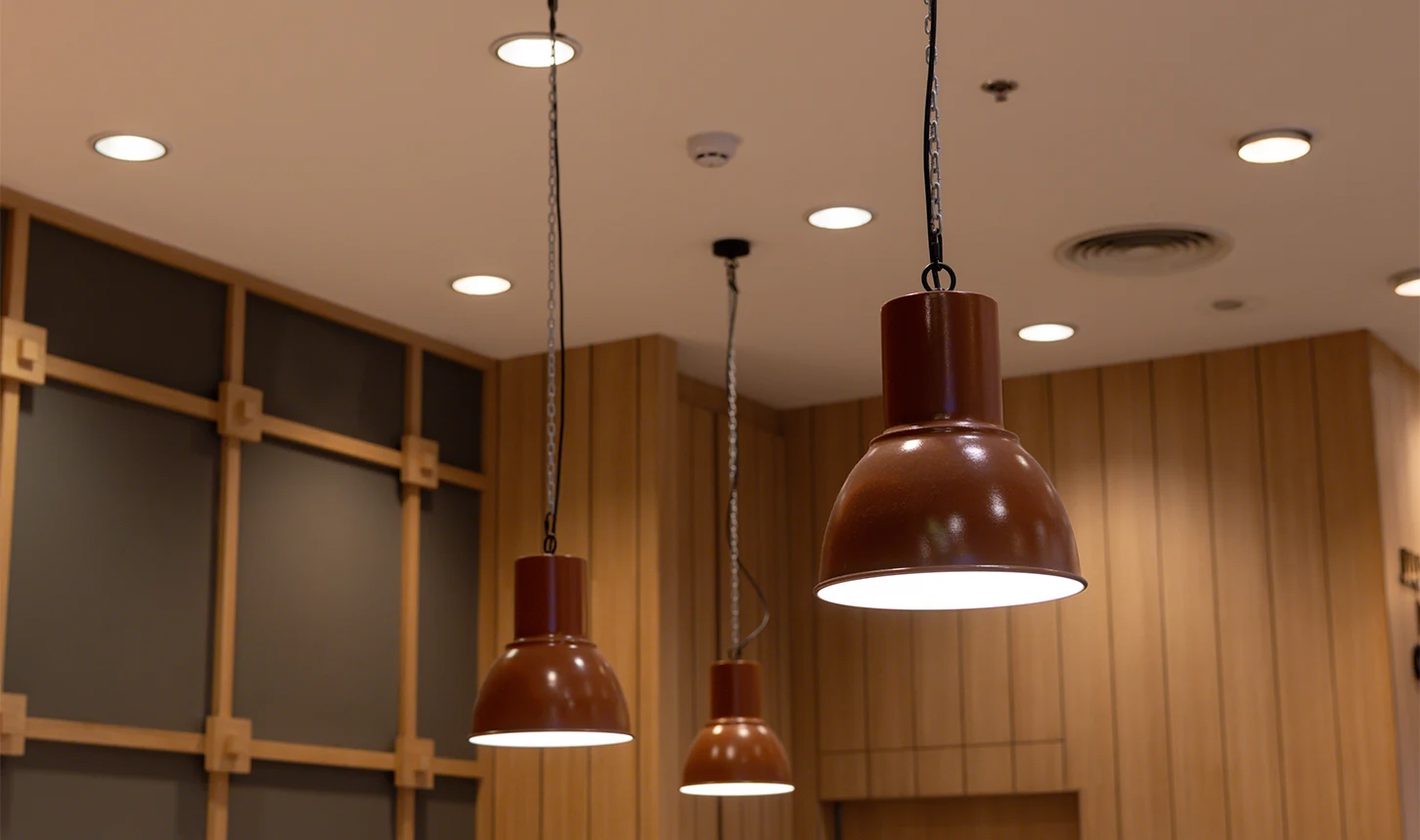
Bright Rooms and Clean Ceilings
A dark kitchen makes every chore harder, and one fixture in the middle of a living room leaves the corners in shadow. When you call us for recessed lighting installation in San Antonio, we space flush lights across the ceiling so the light lands where you cook, read and sit. We handle lighting installation for kitchens, living rooms, bedrooms and hallways, and we do the electrical wiring installation behind them, including the switch, the dimmer and every connection along the run. The wiring above your ceiling gets the same care as the trim you can see. Green Light Electric is a family-owned San Antonio electrician, in business since 2019, and JI Hopes has been in the trade since 2002. The work is done under a licensed master electrician, and as a lighting contractor we handle the fixtures and switches around your recessed lights too.
Planning the Layout With You
Good recessed lighting starts with a plan, because a hole in the wrong spot is hard to take back. Before we cut a hole, we lay out the lights with you: how many go in, where they sit and which switch runs which group. Spacing depends on the ceiling height, the size of the trim and what the room is for. A kitchen wants light over the counters where your hands are, while a living room usually looks better with a softer wash across the walls. A little planning up front saves you from a ceiling that looks like a domino. We look at the beam spread, since a narrow beam leaves bright circles on the floor and a wide one fills the room more evenly. Smaller trims usually suit hallways and accent spots, and larger ones throw more light in big rooms with tall ceilings. We explain the options in plain English, and nothing gets cut until you’re happy with the lighting layout.
Wafers or Traditional Cans
Which one fits depends on what’s above your ceiling. Can lights use a metal housing that sits above the drywall, with a trim and bulb that go in from below. The slimmer choice is wafer lights, thin LED fixtures whose wire connections sit in a small junction box beside each light. They need very little room above the ceiling, so wafers work under a low roof or a second floor, where a full housing won’t fit. Cans give you more trim choices and let you change the bulb later, but they take more room overhead. We install both, and we’ll tell you plainly which one suits your ceiling and your plans for the room. If you already have old cans, an LED retrofit module can often screw into the existing socket and clip into the housing, with no new hole.
Dimmers and the Color of the Light
Most LED recessed lights dim nicely, as long as the dimmer and the fixture get along. Flicker, buzzing or lights that won’t dim all the way down usually come down to dimmer compatibility. Leaving the old dimmer from the incandescent days on the wall is a gamble. We match the dimmer to the LEDs before it goes in. Most LED fixtures run on a driver, a small power unit that feeds the light, and the maker usually lists which dimmers work with it. Light color is the other big choice. Many LED fixtures now come color selectable, with a small switch on the fixture that sets the shade of white before it goes up. Pick one color for the whole room, because two different whites side by side look like a mistake. Warm white feels like an old incandescent bulb and suits bedrooms and living rooms, while a crisper white can look cleaner over a kitchen counter.
Retrofits in Finished Ceilings
You don’t have to tear open a finished ceiling to add recessed lights. In most rooms, we cut a hole sized to each fixture, then fish the wire between the lights. Fishing means pulling the wire through the hidden space above the drywall, so the rest of the ceiling stays closed. Attic access makes the job easier, because someone can run wire and check the framing from above. Under a second floor, a retrofit housing clamps to the drywall from below, so nobody has to get in above the ceiling. Some older San Antonio homes have plaster ceilings, and plaster cracks differently from drywall when you cut into it. We cut and fish carefully in plaster, so a small hole stays a small hole. When we have to open a spot to get wire through, we patch it ourselves, so you aren’t left hunting for someone to fix the drywall. If you’re redoing more than the ceiling, we also handle remodel electrical wiring for new outlets, switches and circuits.
Attic Insulation and IC Ratings
If insulation lies on top of your ceiling, the fixtures up there need an IC rating, short for insulation contact, to sit in it. Insulation can sit right against an IC rated housing, but a non-IC can needs open space around it so heat can escape. Old cans aren’t always IC rated, so we read the label inside the housing before insulation goes back over it. A plain can leaks cool air into the attic through gaps around it, and we use an airtight trim or housing to seal that path. A ceiling full of leaky cans is like leaving a small attic hatch cracked open all summer. Through long, hot Texas summers, those small leaks add up on every light in the room.
Calling Us About a Dark Room
Call (726) 268-9306 and tell us which rooms feel dark and how you use them. Calls are answered any hour, so you can reach us after work or on a weekend. If you’re calling after hours with a real problem, the situation decides whether the crew heads out that night or makes it safe and comes back later. For a lighting job, JI or our crew looks at the rooms, explains your options and lays out the lights with you before any work starts. Where a permit’s required, we pull it and schedule the inspection. Your recessed lights carry our 1-year labor and parts warranty, and the year starts the day the job’s done. Our 31 five-star Google reviews are on our profile if you want to see how other jobs went.
Did you know?
Bright blue LEDs were so hard to make that it took decades of work. In 2014, three scientists won the Nobel Prize in Physics for cracking it, and that’s what made white LED light possible. The slim recessed lights in your ceiling started with that prize-winning work.
Ask Before We Cut
FAQs About Recessed Lighting Installation in San Antonio
It depends on the room’s size, the ceiling height and what you do in there. A kitchen usually needs more light over the counters than a bedroom needs anywhere. Smaller trims usually mean more fixtures for the same amount of light. We plan the count and spacing with you before any holes get cut.
Yes, in most cases. Wafer fixtures and retrofit housings both go in from below, and the wire gets pulled through the space between the joists. Sometimes we have to open a small spot to get the wire around framing. We patch those openings ourselves.
Usually, yes. An LED retrofit module screws into the old socket and clips into the housing, and its trim covers the same hole. If a housing is damaged or the wrong size for the module, we replace it instead. Old incandescent dimmers often need replacing too, so the new LEDs don’t flicker.
Yes, with the right rating. Over a tub or shower, pick a fixture listed for wet locations, which means it’s tested and labeled for direct water. Fixtures near the tub or shower are usually damp rated at least, and the label on the trim says which. Plenty of LED wafers and trims carry those ratings, so you still have good choices.
Usually not, because LED recessed lights draw far less power than the old incandescent cans did. The bigger question is what else already runs on that circuit. If it’s already loaded up or tripping, we look at it before we add anything. When a room needs a new circuit, we can run one.
No. Smart home systems and data or speaker wiring aren’t work we take on. We install LED recessed lights, standard wall dimmers and switches, and the wiring that feeds them.
Sloped ceilings take a housing or trim made for an angle, so the light points straight down instead of at the wall. Vaulted ceilings often have little or no attic space above them, so wafers and retrofit housings come into play. We’ll go over what fits your ceiling when we lay out the lights.
Many older cans have a heat sensor that shuts the light off when it gets too hot. A bulb that’s too big for the housing or insulation packed against a can that isn’t rated for insulation contact is the usual cause. Swapping in an LED retrofit module often fixes it, because LEDs run much cooler. We’ll find out why it’s getting hot first, then fix the cause.

The right electrician changes everything. Complete service for your home or commercial property.
Could you help us with a review?
We sure could use your help letting San Antonio know how good we are.
Learn More
Services
Copyright © 2026 Green Light Electric | 4700 Timco W, San Antonio, TX 78238 | Licensed & Insured · Green Light Electric License #TDLR35520